.png)
How to Choose the Right Wallpaper for Your Home

Updated: Aug 18

Choosing wallpaper isn't just about picking a pattern you like. The material has to match the room - humidity, sunlight, foot traffic, and wall condition all affect how it performs, and getting that match wrong is the single biggest reason wallpaper fails early. In Dallas-Fort Worth specifically, humidity is a bigger factor than most buying guides mention, and it's one we deal with on nearly every residential installation we do.
This guide breaks down what determines whether wallpaper lasts, the four main types you'll choose between, a side-by-side comparison, and how to pick the right one for your room.
What Determines Whether Wallpaper Lasts
Three things control how long wallpaper actually lasts on your wall, regardless of how expensive or well-reviewed it is:
Wall prep quality. Wallpaper installed over uneven plaster, old adhesive residue, or unprimed drywall bubbles or lifts within months. This is the 1 cause of the repair calls we get - see how we approach it on our installation process page.
Room humidity. Bathrooms, kitchens, and laundry rooms put constant moisture stress on wallpaper. The wrong material in these rooms peels at the seams within a year or two.
Material type. Vinyl, grasscloth, peel-and-stick, and traditional paper all react differently to prep and humidity - which is why picking the right category matters more than picking the prettiest pattern.
Climate Tip: Dallas-Fort Worth Humidity
North Texas summers bring sustained high humidity, and older homes without well-sealed HVAC systems see real swings between rooms - something we account for on nearly every job in Dallas, Fort Worth, and the North Texas suburbs. Interior rooms with good climate control handle almost any wallpaper type well; bathrooms, kitchens, and rooms near an older exterior wall need a moisture-resistant material.
The 4 Types of Wallpaper: Which Fits Your Space?
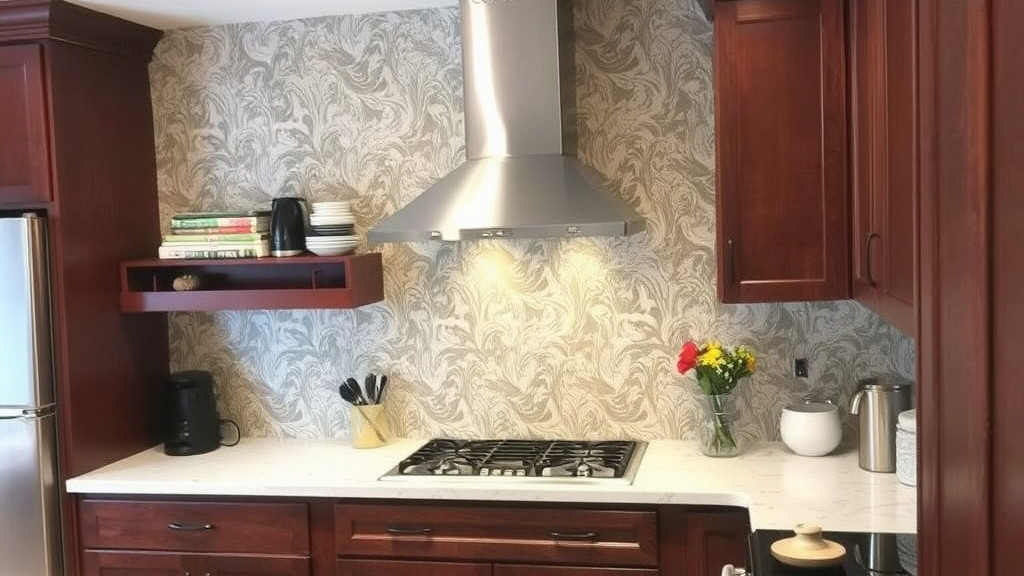
1. Vinyl Wallpaper
PVC-coated, washable, and the most moisture-resistant of the four. The standard for kitchens, bathrooms, and high-traffic hallways and the type we lean on most for commercial spaces that see heavy daily use.
Best for: Bathrooms, kitchens, kids' rooms, high-traffic areas, humid rooms
Watch out for: Heavier vinyl is harder to remove cleanly later - worth knowing if you might change it in a few years (our wallpaper removal team handles this often)
2. Grasscloth Wallpaper
Woven from natural fibers like sisal, jute, or seagrass, grasscloth adds texture and warmth no printed pattern can replicate. It's higher-end and less forgiving - any bump in the wall shows straight through it. Full details on prep requirements are on our Grasscloth Wallcovering service page.
Best for: Living rooms, dining rooms, home offices - lower-humidity, lower-traffic spaces
Watch out for: Not moisture-resistant, and it will always show visible seams - that's the nature of the material, not a flaw in the install
3. Peel-and-Stick Wallpaper
No paste required - the adhesive is built into the backing. The most beginner-friendly option and fully removable, which is why it's popular for a single accent wall rather than a full room.
Best for: Accent walls, rentals, rooms you may want to update again in a few years
Watch out for: Adhesive performance drops in humid rooms and on textured or unprimed walls - it needs a smooth, clean surface to actually hold
4. Traditional (Non-Woven / Pasted) Wallpaper
Applied with paste, traditional wallpaper offers the widest range of finishes, including large-scale murals. It's the longest-lasting option installed correctly, and the one most worth hiring a professional for - see examples on our Luxury Wallpaper Installation page.
Best for: Full-room installations, murals, formal spaces, long-term installs
Watch out for: Least DIY-friendly of the four - pattern matching and seam work take real experience
Wallpaper Comparison Chart
Type | Humidity Resistance | Durability | DIY-Friendly | Typical Lifespan | Best Rooms |
Vinyl | High | High | Moderate | 10-15 years | Kitchen, bathroom, hallway |
Grasscloth | Low | Moderate | Low | 8-12 years | Living room, office, dining |
Peel-and-Stick | Low–Moderate | Moderate | High | 3-5 years | Accent walls, rentals |
Traditional | Moderate–High* | High | Low | 15+ years | Full rooms, murals, formal spaces |
Depends on the specific material - vinyl-coated traditional papers resist moisture well; uncoated paper does not.
How to Choose the Right Wallpaper for Your Room: A 3-Step Guide
Step 1 - Identify the room's humidity level. Bathrooms, kitchens, and laundry rooms need vinyl or a vinyl-coated traditional paper. Living rooms, bedrooms, and offices have far more flexibility, including grasscloth.
Step 2 - Match your timeline to the material. Updating the look again in a few years, or renting? Peel-and-stick. Staying long-term and want it to last? Traditional or vinyl.
Step 3 - Check your wall condition before falling in love with a pattern. Older homes with plaster or textured walls need more prep before certain materials (especially grasscloth or peel-and-stick) will lay flat. This is worth assessing before you buy the wallpaper, not after - we do this as part of every free consultation.
Wallpaper Installation Process (What Actually Happens)
Assess and prep the wall. Patch cracks, smooth uneven plaster, remove old adhesive residue, and prime if needed. This step determines whether the install lasts years or months.
Plan the pattern layout. For patterned or mural wallpaper, panels are dry-fit and measured before any adhesive goes on, so seams and pattern repeats line up across the full wall.
Hang and smooth each panel. Panels are set, smoothed to remove air bubbles, and seams are aligned edge to edge.
Trim and finish. Excess material is trimmed at baseboards, ceiling lines, and outlets for a clean edge.
Wallpaper Maintenance
Vinyl: Wipe with a damp cloth and mild soap as needed - the most cleanable of the four.
Grasscloth: Dust gently; avoid water or cleaning products, which can stain or warp the fibers.
Peel-and-stick: Spot-clean gently; avoid abrasive scrubbing, which can lift the adhesive.
Traditional: Follow the specific finish's care instructions - vinyl-coated papers can be wiped, uncoated papers should only be dusted.
Across all types, address lifting seams or corners quickly - a small fix now prevents a full section from needing replacement later.
Where Professional Installation Makes the Biggest Impact
Older Dallas-Fort Worth homes with plaster walls - proper prep prevents cracking and uneven surfaces from showing through
Bathrooms and kitchens - correct material and sealing matter more here than anywhere else in the house
Grasscloth and mural installations - the least forgiving of installation error, and the most visible when something's off
Large open-concept accent walls - pattern alignment across a big, uninterrupted surface takes planning most DIY installs miss
Frequently Asked Questions
What's the most durable type of wallpaper?
Vinyl and vinyl-coated traditional wallpaper are the most durable overall, standing up well to cleaning, humidity, and daily wear - which is why they're the standard for kitchens and bathrooms.
Is grasscloth wallpaper a good choice for a Texas home?
Yes, in the right room. Grasscloth performs well in climate-controlled living rooms and offices but isn't suited for bathrooms or rooms with significant humidity swings.
How long does professional wallpaper installation take?
Most single-room installations take one to two days, depending on room size, wall condition, and whether pattern matching (murals, large-scale prints) is involved.
Can I wallpaper over old wallpaper?
It's not recommended. Old wallpaper and adhesive residue underneath prevent new wallpaper from adhering properly and can cause bubbling or peeling within months - this is one of the most common reasons people call our removal service before a new install.
Do I need professional installation, or can I DIY it?
Peel-and-stick accent walls are reasonably DIY-friendly. Grasscloth, murals, full-room traditional wallpaper, and any project involving plaster or older walls are where professional installation makes the biggest difference in how long the finished result lasts.
Not sure which wallpaper type is right for your space? We can walk you through the options based on your room, wall condition, and how long you want it to last. Get Your Free Quote
About the Author
Brent - Founder, Rebirth Paperhanging || Brent is an architect-trained installer and registered interior designer with 25+ years of experience hanging wallpaper across the Dallas-Fort Worth area, from historic homes to new-construction builds. His background shapes how Rebirth approaches every wall - treating surface prep and pattern precision as seriously as the finished look.


Comments